Forums are coming back

terere

Member
Licensed customer
I know that many people who run forums remember them being very popular before social media started to replace them. And search engines made the job of bringing visitors to the communities.

It seems in a twist of irony that AI might actually bring many forum communities back to the web. Most social sites moved now to log in experiences only because they want to target users with ads, but more important, avoid AI services scrapping their content for free.

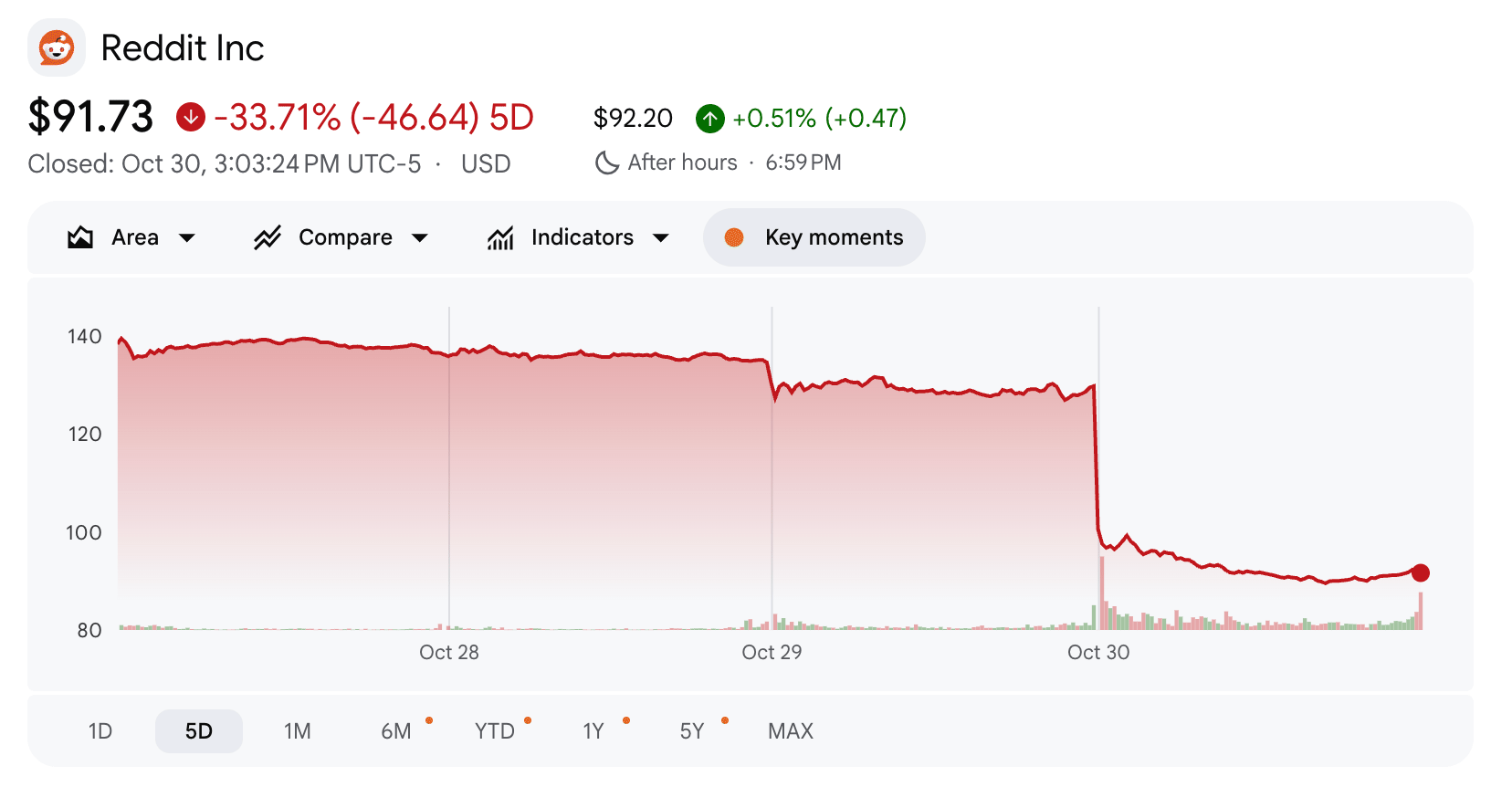
Now the biggest social site which is basically targeted forums directly is also moving to a logged-in experience only. Reddit! The site that lets people host their own sub forum announced they are transitioning to a logged-in experience only. So the content and search results will be basically useless as it will force everyone to require an account just to read the content.

Not sure about you guys, but this might be a coming back for forums. These massive sites can't afford to have AI scrapping their content for free at their scale, so they are all turning into private sites only. Twitter was open to read, X is not, Facebook was open to read many years back, now it's not. Reddit is still open to read, now its also moving away from this. LinkedIn was one of the first one to do it many years back. So it seems basically all social sites will not be public available anymore in the future which is a massive opportunity for forums to come back.

Requiring an account just to read content is very invasive. Many people just read or are viewers before joining or participating. I consider this a big negative for social sites.
 
I don't know about "coming back," as the forums I've managed for over 20 years now have done nothing but grow continuously, as have many I've been a member of. There have been cases of mismanagement, where a big company like Verticalscope buys up communities and piles on so many ads that the experience becomes unbearable. I can only think of a few that have grown after they were taken over; I've seen too many others lose participation. New forums are hard to start today, though, unless they are a specialist niche or the forum spun off from a larger forum where members became disgruntled and left.

Another thing that might contribute to growth is that so many people are tired of going to social media for engagement and find that they are being fed algorithms rather than genuine content they want to view. (That is why I avoid putting anything on our forums that suggest content to visitors, beyond showing which topics are new and trending. I don't want a machine telling our visitors what to read otherwise.)

Requiring an account just to read content is very invasive.
Reddit's posts have increasingly come up in my Google search results. A lot of it is noise, but every so often I get something useful out of the result. I read that they've found their incoming traffic from Google has dropped, but what do they think will happen if they cut that off completely? Yet I'm sure there's also the idea that the giant AI companies are going to dangle carrot$ in front of Reddit to allow them access, as some of them rely heavily on Reddit posts for training their LLMs. All about the money and the greed.
 
There's also a slight bump in traffic from AI search results citing forums as a source and users will click into that forum.
 

reddit always comes up first because if their partnership.
and they are still getting hammered with losing traffic just like the rest of us due to AI snippits.

Google/ai broke the internet and it's model of payments to keep things running.

something new is coming, or it has to.
 
There's also a slight bump in traffic from AI search results citing forums as a source and users will click into that forum.
That is kind of the opposite of what I've read. The short version is that many AI users are too lazy or clueless to click through to anything--they just take their answer from an AI chatbot and go on with their lives. This wasn't in relation to forums, but to traditional news and magazine sites, seeing substantial drops in visits (and ad revenue) since visitors are accepting AI answers rather than diving into the sources to get the factual information (or at the very least, read the origin article to be certain that AI doesn't take it out of context, as it usually does).

That is what I feel might eventually kill forums, not social media or anything else. The general public will get so used to asking AI or their search engines for an answer, getting a response (that has little chance of being completely accurate, something they are oblivious to), and going on with their lives.

I attempt to keep AI scrapers out of any forums I manage, just for that reason. If they want to get our information or better yet, join up and participate, they need to come to us.

With AI, people want information brought to them. They don't want to work for it. It's like walking into the library and expecting the librarian to tell you about Antarctica. He or she might tell you what they know, but the actual books on the shelves are where the real information lives.
 
something new is coming, or it has to.
👆 This.

While I appreciate all the information I can find on the Internet today, I miss the early days of the Internet's popularity, back when the WWW was barely known about, and Usenet was a place with genuine discussions, not a haven for spam and illegal downloads.
 
It's not a secret that search engine traffic is dropping from real users, while bot traffic is increasing. This is also likely the only reason why companies like Reddit, after many years, are making such a bold move to close public content. However, search engines are not going away, just like AI isn't either. While AI chatbots are now starting to link to some sites, it's very rare, and they usually don't bother naming sources unless you ask. I also think most people do not click on those links unless they want to verify something. Therefore, traffic coming from AI chatbots will not be considerable.

But this change means that existing search engines like Google will now have to start integrating or replacing results with content previously sourced from places like Reddit or other social sites. I remember many years ago when Google prioritized forum results before it shifted into mostly displaying Reddit results, so perhaps that is returning.

I also think something will have to change here as well. Just like it's not in Google's best interest to lose traffic, AI services will have to make some compromise in the future. As sites start to block their scrapers, they will be left without updated content. They will either have to start returning traffic by displaying those links more prominently. Nobody knows how this is going to change, but websites are certainly not going away, and AI companies are also realizing they can't keep taking content without giving anything back. The only reason search engines like Google were allowed to scrape the entire web was because they gave traffic back.
 
👆 This.

While I appreciate all the information I can find on the Internet today, I miss the early days of the Internet's popularity, back when the WWW was barely known about, and Usenet was a place with genuine discussions, not a haven for spam and illegal downloads.

I definitely miss that internet. It was less toxic, you just landed from one site to another. It felt more interesting because most sites weren't companies trying to sell you something, but rather people building their own websites for fun. Everything from alien conspiracy theories to personal travel adventures.

Several things have changed, in my opinion:

1. Browsing on phones was not the norm.

Most people browsed only from desktop computers. Google and Apple successfully pushed users toward apps because they make money from apps, not websites. Apple would actually kill the browser or websites entirely if they could, this is why they are always late adopting web technologies as they can potentially replace their app ecosystem like progressive apps. This is why people using phones rarely use browsers, instead, they simply look for the app. A system imposed by Google and Apple, they hurt the web by pushing apps, and most apps are just fancy wrappers for a website anyway. Although there are more phone owners today than PC users, many don't actually use them to browse the web. I think this is the number one reason. They open the app store when they want to find something.

2. Search engines were inferior.

Yahoo was mostly a directory you clicked around. Before Google, search wasn't instantaneous; you had to “look around,” meaning you visited a lot of sites just to find information (if it even existed). This process naturally forced people to land on multiple websites. Sometimes this exploration was fun because you found something better or saved that site for the future, even if it wasn't directly relevant to your question, sometimes it was just interesting like walking around a new city. On the web everyone was a tourist. This is where the term web surfing comes from. That is mostly gone now. People online just go to the same sites every day. The traffic is heavily concentrated, which is not good for innovation.

3. Social sites did not exist.

Restaurants and small businesses operated with dedicated websites. Many small businesses owners replaced their sites entirely with a Facebook or Instagram page because it is free and easy. As modern websites became more complex with so many frameworks, stacks and code libraries, they now require developers to build something decent. Pages were much simpler initially.

4. Hyperlinks were the foundational basic.

The primary concept of the early web was linking. Linking was heavily promoted and taught; sites connected robustly through each other. Today, nobody seems keen on linking out. As a result, the web is less interconnected. This shift involves both reputation concerns and security. People are afraid of clicking random links and sites don't want to link anymore. Even social networks that once asked users their own URL or link on profiles don't anymore. Selfishness included, everyone wants to keep people on their sites.

5. Spam used to be limited to email, not content.

Now, spam content invaded forms and websites are built with poor quality. Unless there is some form of human verification in the future, this problem will likely increase with AI. Finding genuine content by real people is harder; you no longer know if someone behind a comment is a robot or a person. The web used to feel more human; now it feels increasingly robotic. I believe something must change regarding this at some point, but we simply have to wait and see how technology evolves.

Finally, the early internet was not full of mega-corporations making fortunes. While generating money online was possible, it wasn't the main priority for most websites. Many people built websites without expecting a dime. Today, everyone seems intent on selling you something.
 
Back
Top Bottom