XF Internal Linker V2 - The Vibe Coding journey begins!

Long story short, the code quality is meant to be avionics-grade, zero exception, state-of-the-art.

The problem is this will take several months or 2 years to get there, but then I will know my journey is looking bright. I might get a round of applause when it's all said and done. Who knows, just thoughts and dreams, if you will.
 
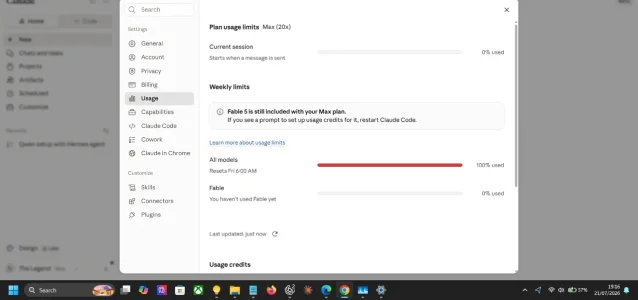
I have been exploring and going back and forth with Codex. Before I go further, please excuse my GUI; it looks rough, yes, I know. That's not important, will deal with that later. I am transitioning from Angular to React. Cleaning up messy code with Codex Sol, will do more reviews on Friday with Fable when my Claude resets.

Nonetheless, I am currently working on making the app an Electron app; I thought about making a WP/XF with both a plugin/addon for the aforementioned, but for security reasons and not wanting to mess with PHP, I have settled for having a Windows-only version of the app.

My testing rig kinda is set up like this:

WP / XenForo sites
↑↓ REST API
Electron app on MSI
│
├── Spring Boot coordinator
├── MSI GPU worker
└── US2 remote worker

Dell
└── testing / CI/staging only

The split becomes:
  • MSI: Electron UI, Spring Boot coordinator, local GPU inference
  • US2: remote compute worker for bulk jobs
  • Dell: CI, testing, staging
  • WP/XF: external content systems accessed through APIs
Note: US2 means Ubuntu Server 2. Dell has Ubuntu too; Dell has 16 GB RAM, processor 15-13500T, and doesn't have a GPU. I bought a small Dell machine for testing. But listen, the main idea here is that the app doesn't run on your server; it can run on your home machine/pc whatever.

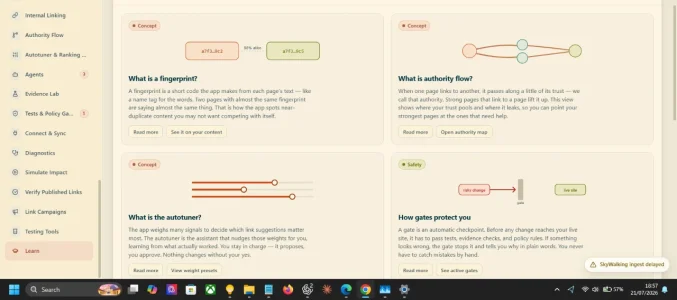
It's possible to make the app run on the server, but I thought of not doing that. Because it would slow down people's servers. Currently working on making the app self-documenting, e.g., look below...
 

Attachments

  • app delayed 07-2026.webp
    app delayed 07-2026.webp
    52.2 KB · Views: 31
  • claude blasted.webp
    claude blasted.webp
    27.3 KB · Views: 31
Would you be willing to provide us with a big-picture overview of what has happened so far? It looks like it got super complex somewhere along the way. Is that because you were doing local embedding to find similar threads?
 
Learned a lot; vibe coding ain't easy. 😁 The valley of despair is real.

Anyway, created a new Constitution. The United States of Agents' Constitution is alive now. This way I can control my AI babies and their future generations as a benevolent dictator.

Background: the project at one point changed its language law six times in five days. That is unacceptable; The Constitution exists to stop that. It states what must always be true, and which gate proves it. It does not explain, persuade, or record history; reasoning lives in the interview records.

Three standing rules about the Constitution:
  1. No rule without a gate. A rule that cannot be mechanically checked is a suggestion, and suggestions decay. Every rule below names its gate. Where the gate does not exist yet, that is stated plainly rather than implied.
  2. A rule appears exactly once. If it is here, no other document restates it. Other documents point at it.
  3. The law is frozen. The language roster in §1 does not change until the constitution is signed off and at least one capability has shipped end to end.


The language law​

1.1 First-party languages - the roster is FINAL!​

LanguageOwnsDecides
RustPlatform, control plane, product domain, security, authentication, authorisation, tenancy, configuration, APIs (REST/GraphQL/SSE), PostgreSQL ownership, Kafka and event processing, search orchestration, AutoIssues, console, observability, deployment, model registry and activation"Should this happen?"
C++17The entire AI lifecycle: data loading, feature engineering, training, evaluation, hyperparameter optimisation, inference, embeddings, ranking execution, model conversion, quantisation, GPU/CUDA acceleration, SIMD kernels, all hot paths"How do we calculate this efficiently?"
TypeScriptThe browser: React, Studio, DDK, visual builders, dashboards, developer cockpit, typed API clients"How should humans interact with the system?"
CThe ABI bridge only - contracts/abi/signal_abi.h and its versioning. Never business logicNothing. It is a connector.

Rust is the brain. C++ is the muscle. C is the nervous-system connector. TypeScript is the face. PHP may be added to the Constitution, and the SDK and DDK.

The DDK is a design development kit that's meant for agencies who may want to tweak how the app looks down to every detail; this way, people will stop complaining about the GUI being ugly. And for noobs like me, there is something like a page builder; you just point and click, drag the layout, whatever mess or beauty you want to bring to life.

The SDK is still something for consideration; ideally, it would be great for open source stuff, but some companies have a habit of taking open source projects and putting them behind their SaaS walled gardens. Will talk about that later.


1.2 Banned first-party languages​

Java and Python are banned as first-party source, shipped runtime, and build-required tooling. So are Go, C#, Haskell, Lua, Fortran, and .ps1/.psw/.cmd/.bat/.vbs automation. C23 does not return; C's role is §1.1's ABI bridge and nothing more.

Python's ban includes model training; C++ owns the whole AI lifecycle (§1.1). The product does not become a research framework: C++ trains the product's own models (ranking, quality scoring, anomaly detection, embeddings, classification). Foundation models are never trained here; they are imported as controlled artifacts.

Note: Spring Boot, Gradle, and the Java ecosystem were tried for curiosity's sake (it's interesting at the speed you can swap and try different things with Docker containers, though; very useful).

Problem: Java isn't a horrible language, just too heavy; the target is getting things to run on systems with 16 GB of RAM and a minimum of 20 cores. Also, Python was banned for being too slow; actually, Python has some best-in-class ML/AI libraries. However, benchmarks showed that Rust or C++ can be optimized to run 20x faster than Python for scoring/crawling. For instance, the project has a scoring/computing stage, where imported XenForo threads/replies/resources/articles, or WordPress, etc, are embedded, but the math stuff with Python is a SLOW process; C++ is fast, like really fast. Below is the stuff that C++ will have to crunch, but although it says 14 signals, actually, some are hidden; the project will ship with over 500+ weights, and meta algorithms (i.e., not meta as in Facebook, lmao, but meta meaning algorithms that fine-tune base algorithms; the vision is making the system sentient).

Screenshot (1103).webp


Documentation is colocated (Google g3doc convention): every module carries its own g3doc/ directory and a README.md landing page. The top-level docs/ holds only what spans modules.

4. Rust module structure​

One crate per bounded context:
kernel · identity · tenancy · agencies · projects · configuration · studio · workflows · policies · search · ranking · quality · analytics · autoissue · ai-orchestration · console · audit · operations · telemetry · api-rest · api-graphql · api-sse

Boundary rules:
  • Each crate declares its permitted dependencies explicitly. Anything not declared is forbidden.
  • No cycles.
  • Domain crates never depend on infrastructure - not axum, sqlx, rdkafka or any adapter.
  • Modules never call each other over HTTP inside the process. Direct typed interfaces only.
  • One module never reads or writes another module's tables.
  • No common, shared, utilities, helpers, or misc crate. Shared code is named after and owned by the capability it implements.
  • No global mutable service locator. Dependencies are supplied at the composition root.
  • Cross-module reactions use explicit typed events.

4.1​

Renamed from admission and radically narrowed, 2026-08-03. console is a runtime layer sitting above Docker. It is designed to be extensible for later features, but its scope today is:
  • Queue heavy work with limits
  • Split divisible work across machines
  • A plugin registry with manifests and versions
  • Error logs
  • Permission enforcement — untrusted code runs in a throwaway container with no network and no credentials
  • Per-module resource budgets
  • Self-measurement
What console explicitly does NOT do:
  • It never places containers. Docker does that.
  • No consensus. No leader election. No quorum. No stateful failover controllers.
  • PostgreSQL row locks are the coordinator.
"Admission" survives only as the name of one decision console makes when work arrives.

This supersedes the Google Borg-compatible scheduler design in docs. The eight-step placement algorithm, Borgmaster/placement-engine/agent split, replicated log, leader election, quorum survivability, and per-engine stateful failover controllers are all withdrawn. Part 2's execution-driver model, native installer and durable-settings design survive, minus the scheduling machinery. Multi-machine growth uses Docker Swarm mode, not a first-party scheduler.

Recorded plainly because it is the single largest scope reduction in this Constitution: it removes a distributed-consensus system that two machines never needed, and with it the deterministic fault-injection burden the 100% Law would have imposed on that consensus code.

5. Governed novelty - Rule 56​

Novel capabilities are welcome, valuable extensions are encouraged, proven wheels are reused, and duplicate meanings are rejected.

This applies to new capabilities, features, modules, libraries, algorithms, services, components, workflow nodes and architectural abstractions. It does not apply to security fixes, defect corrections, compatibility work, maintenance, migrations, documentation, test strengthening, dependency updates, deletion or consolidation - those are valuable without being novel.

7. The 100% Law​

Every ratio at exactly 1.0000. Every defect count at 0. Whole repository. Every commit. No ratchets, no changed-file boundary, no exceptions, and --no-verify is never used.

GaugeToolTarget
rust.coverage.line / .branchcargo-llvm-cov1.0000
rust.mcdcfirst-party engine (§5.3) — Rust stays on stable1.0000
rust.mutation.killfirst-party engine (§5.3)1.0000
rust.unsafe.countcargo-geiger0
cpp.coverage.line / .branchllvm-cov1.0000
cpp.mcdcllvm-cov -fcoverage-mcdc1.0000
cpp.mutation.killMull1.0000
cpp.misra.violationsclang-tidy, MISRA C++:2023 profile0
ts.coverage.line / .branchVitest1.0000
ts.mcdcfirst-party engine (§5.3)1.0000
ts.mutation.killStryker1.0000
sanitizers.failuresASan · UBSan · TSan0
code.duplication.blocksELCV semantic dedup0

Rust stays on the stable toolchain. Rather than pin nightly for -fcoverage-mcdc under a Law with no bypass — where an upstream regression would block every commit with no exception mechanism — the Rust MC/DC engine is built first-party (§5.3). rust.mutation.kill at 1.0000 remains unproven at this scale and is verified on Dell before product code is written (§13.1).

One conditional, to be settled by the toolchain verification (§13.1): if stable Rust turns out to support llvm-cov -fcoverage-mcdc, the first-party Rust MC/DC engine in §5.3 becomes unnecessary and is withdrawn — adopting the existing tool instead, per Rule 56 §5.2. The first-party engine is justified only by the absence of a stable-toolchain option. Do not build it before that question is answered.

Two targets may be physically unreachable, and the verification is designed to find out (§13.1):
  • mutation.kill = 1.0000 - a mutant is equivalent when the mutation behaves identically for every reachable input. Equivalent mutants cannot be killed by any test, and identifying them is undecidable in general. If real equivalents exist in this codebase, the target is not merely hard; it is impossible as stated.
  • mcdc = 1.0000 - defensive branches, unreachable!() arms and error paths that cannot be triggered without breaking an invariant are uncoverable by construction.
If either proves unreachable, it is reported as unreachable and brought to the owner - it is not quietly relaxed, and no exclusion mechanism is used to manufacture the number. Doing so would be the exact gaming the anti-gaming controls exist to catch.

8. Language standards​

8.1 Rust — full strict mode​

#![forbid(unsafe_code)] · #![deny(warnings)] · clippy pedantic and nursery denied · no unwrap, expect, panic!, todo! or unimplemented! outside tests · no as casts (checked conversions only) · every public item documented.

Errors: thiserror in libraries, anyhow at executable boundaries. Failures propagate as Result and surface loudly at the boundary — consistent with §6.

Stack: tokio · axum · tower/tower-http · async-graphql · sqlx · rdkafka · tonic/prost · serde · tracing + OpenTelemetry · argon2/jsonwebtoken/rustls · secrecy/zeroize · uuid/ulid/time · wasmtime (sandboxed advanced mods only). Testing: cargo-nextest (execution) · proptest (property-based) · cargo-fuzz (fuzzing) · insta (snapshot/regression) · loom (concurrency interleavings) · criterion (benchmark) · testcontainers-rs (integration against real PostgreSQL/OpenSearch/Kafka) · mockall (mocking — used only where a trait cannot simply be implemented for test; prefer a real test implementation). Coverage and safety: cargo-llvm-cov (coverage) · cargo-geiger (unsafe count) · Miri (undefined-behaviour detection). Supply chain: cargo-deny · cargo-audit · cargo-vet · cargo-semver-checks. Dioxus is rejected — it would duplicate the TypeScript frontend.

Validation: garde. Chosen over validator because it supports context-aware validation — passing tenant, project and configuration state into a validator — which this product needs everywhere given §2.2's tenancy rules, and which validator handles awkwardly. Its structured error type also maps cleanly onto the RFC 9457 problem responses the REST surface returns. Exactly one validation library; running both is the anti-pattern.

8.2 C++ / C++17 under a written MISRA profile​

C++17 specifically, so that MISRA C++:2023 applies cleanly. This is deliberate: the project previously claimed MISRA C:2025 compliance for C23, which MISRA does not cover. That mistake is not repeated.

RAII everywhere · no raw ownership · no manual memory management unless justified · no exceptions across ABI boundaries · no undefined behaviour · no global mutable state · Google C++ Style Guide · Abseil (absl::Status, absl::StatusOr, flat_hash_map, Span).

MISRA applicability matrix, approved and prohibited C++17 features, compiler-behaviour register, deviation records, UB register, tool-coverage matrix. The profile exists; C++ admission remains blocked until its licensed per-guideline register and qualified analyser are present.

Stack: Abseil (absl::Status, absl::StatusOr, flat_hash_map, Span) · LibTorch · Eigen · LightGBM/XGBoost C++ · FAISS · SentencePiece · ICU · oneTBB · OpenBLAS/oneMKL · Arrow/Parquet C++ · CUDA/TensorRT. Build: CMake + Ninja + vcpkg/Conan + Clang. Testing: GoogleTest (unit) · GoogleMock (mocking) · FuzzTest (property-based + fuzzing, over libFuzzer) · ApprovalTests.Cpp (snapshot/regression) · Google Benchmark · Mull (mutation) · ASan/UBSan/TSan (sanitizers, and the only concurrency check on this side - there is no C++ equivalent of Rust's loom) · llvm-cov (coverage and MC/DC). Static analysis: clang-tidy - carrying the MISRA profile, the bugprone-* checks, and the clang-analyzer-* interprocedural path-sensitive checks · clang-format · cppcheck · include-what-you-use (include hygiene).

Module boundaries. C++17 has no module system and no ArchUnit equivalent. Boundaries are declared as CMake target-level dependencies and enforced by a first-party include-graph gate - the same shape as SC-ARCH-001 on the Rust side, over #include edges instead of crate edges. Gate SC-CPP-002 - include-graph check. Does not exist.

Property-based testing: Google FuzzTest. It provides property-based testing and coverage-guided fuzzing behind one FUZZ_TEST API, integrates natively with GoogleTest, and drives libFuzzer as its engine - so it is a better front end to a tool already chosen, not a second runtime. It is built for exactly this stack: GoogleTest, Abseil, Clang, Linux. Collapsing two tools into one satisfies Rule 56's smallest-maintainable-implementation preference. Fallback if FuzzTest's build integration proves unworkable under vcpkg/Conan: RapidCheck, the conventional QuickCheck port for C++, with libFuzzer retained separately for fuzzing.

Snapshot/regression testing: ApprovalTests.Cpp. The C++ golden-master library, header-only, with GoogleTest integration - the direct analogue of Rust's insta.

8.3 TypeScript​

Strict mode, tsc --noEmit. No any. No business logic in JSX. No compute the backend owns. Downward-only imports: ui → shared → features → app/routes. No cross-feature imports.

Stack: React · Vite · TanStack Router/Query · Zod · React Hook Form · @xyflow/react · Monaco · dnd-kit · Storybook. Testing: Vitest (unit + coverage) · Testing Library (component) · fast-check (property-based) · Stryker (mutation) · Playwright (E2E, the canonical interface proof) · MSW (API mocking) · axe-core (accessibility) · Vitest bench (microbenchmark - the JMH equivalent on this side). Static analysis and boundaries: tsc --noEmit strict · Biome (lint and format) · dependency-cruiser (import boundaries).

No TypeScript fuzzer, deliberately. fast-check is sufficient and nothing more is adopted. The untrusted-input parsing that would justify a fuzzer does not live here: .scp packages, imported bundles, workflow graphs and crawled content are all parsed by Rust (covered by cargo-fuzz) or C++ (covered by FuzzTest), because §2.1 forbids TypeScript from computing anything the backend owns. TypeScript parses API responses from its own trusted backend and form input validated by Zod. Adding a JS fuzzer would be tooling for a surface that does not exist; a Rule 56 REJECT.

Studio is a mode inside the single application, not a separate app: one design system, one auth session, one navigation, one permission surface.

8.4 C - the ABI bridge​

C is not a production language (§1.1). It exists as contracts/abi/signal_abi.h plus versioning, and its only job is to be a stable binary contract between Rust and C++, both of which have unstable ABIs of their own.

The rule it must never break: the ABI is permanent. A change that alters struct layout, function signatures, symbol names, or calling convention is a breaking change even when it compiles.

Tooling: clang-format (formatting) · clang-tidy + cppcheck (static analysis) · a C compiler check proving the headers compile cleanly as C, not merely as C++ · abidiff (libabigail) for binary-compatibility verification against the previously released ABI · symbol versioning · a frozen header corpus kept as the comparison baseline.

abidiff is the C-side equivalent of cargo-semver-checks on the Rust side. Without it, "the ABI is stable" is an assertion rather than a checked fact.

Gate SC-ABI-001 - headers compile as C; abidiff reports no breaking change against the frozen corpus; symbol versions are intact. Armed from the first C commit, not before - an ABI gate with no ABI to check is vacuous.
 
The problem is this will take several months or 2 years to get there
I'm pretty sure Fable could solve this in a day or two. Claude code is literally building claude code, 100% of the coding. Why are you building an app outside XF itself? Adding a bot to scan a large forum is not going to work well. Maybe a small forum, but then you built software that is useless to everything else. You could simply build an addon which would be far more efficient at doing this, however, you would realistically still need another database to hold what you want to achieve from this, as you wouldn't want this constantly analysing your working DB.

If you know how to use the tools properly, then you could vibe code this with the right skills installed in under 48hrs, with gold standard coding. Fable thrives at making algorithms.

Fable and Opus 5 wrote over 7k specs each averaging 28k words and requirements all deduped and reviewed twice. Still not done. So far have millions of words for Spec Driven Development.

And here you are saying oh Fable can do this in 48 hours. Tell me what 20 max plan can do that in 48 hours?

The database point is right, and it's already how it works, separate Postgres, separate
index, nothing runs against a live working DB. Worth noting that conceding this rather
undercuts the addon argument though. If you need a second database anyway, most of the "efficiency" you're describing has already left the building.

On the addon being better: it can't be, and not for architectural-taste reasons. The product reconciles crawl data against Search Console, GA4, Matomo, Bing and backlink sources, and shows you where they disagree. An addon sees one thing: the forum's own tables. You can't reconcile four sources from inside one of them.

The Rust crawler is no slouch either, it's amazing, 100k pages/posts/threads per minute. 1 million in 10 minutes. It's not meant to just crawl one site, it can crawl the web if space isn't an issue for competitive analysis and the ranking weights plus core algorithms plus meta algorithms plus local AI guardrails to learn and autotune themselves while you have coffee and you can watch them move in REALTIME. 🤣


XenForo is now one connector among several, WordPress, and the actual target are agencies and power users running 40 client sites across half a dozen platforms. An addon gets you one of them. "Useless to everything else" is a pretty good description of a XenForo addon.

On the 48 hours: for the thing you're picturing, probably, yeah. Ingest, embed, cosine, suggest, write. That's a weekend and I'm not going to pretend otherwise.

For what's actually specced, it's 472 capabilities, a work-management, web analysis engine, a state of the art AI engine, content creation engine with zero hallucinations there is Aegis harness, multi-tenancy with row-level security, and a 100% MC/DC coverage requirement across three languages and so much more.

Though I'll give you this much: "that's far too big" is not the worst thing anyone's said
about it, and it's not the first time I've heard it this week.
 
Going to add social media support:

Fable created this:


Markdown (GitHub flavored):
┌─────────────────────────────────────── SOURCES ───────────────────────────────────────┐
│                                                                                       │
│  WEBSITES                   SOCIAL PLATFORM APIs         OWNED ANALYTICS              │
│  HTML · sitemaps · RSS      YouTube · Reddit · Twitch    GA4 · Search Console         │
│  robots-respecting crawl    X · TikTok · FB · IG         channel insights (OAuth)     │
│                                                                                       │
└───────────────────────────────────────────────────────────────────────────────────────┘
                                            │
                                            ▼
┌────────────────────────────────── PULSE — INGESTION ──────────────────────────────────┐
│                                                                                       │
│  Channel connectors — two modes: public listening · first-party OAuth                 │
│  Web crawler — existing website ingestion (HTML, sitemaps, RSS)                       │
│  Webhook receivers — Twitch EventSub · YouTube WebSub (push instead of poll)          │
│  Rate-limit budget manager — per-API quotas shared fairly across users                │
│  Refresh scheduler — decay curve: hot posts hourly → month-old posts weekly           │
│                                                                                       │
└───────────────────────────────────────────────────────────────────────────────────────┘
                                            │
                                            ▼
┌───────────────────────────── PROCESSING & NORMALIZATION ──────────────────────────────┐
│                                                                                       │
│  Normalizer — unified post schema: id · platform · author · type · text · media       │
│  Canonicalizer — dedup crossposts, retweets/quotes → one canonical node               │
│  Enrichment — transcripts (captions/ASR) · OCR · topic + format tags · comments       │
│  Metrics snapshotter — likes/shares/views at 1h · 6h · 24h · 7d (time series)         │
│                                                                                       │
└───────────────────────────────────────────────────────────────────────────────────────┘
                                            │
                                            ▼
┌─────────────────────────────────────── STORAGE ───────────────────────────────────────┐
│                                                                                       │
│  Post store    Metrics TSDB    IDENTITY GRAPH       Blob store    Feature store       │
│  (documents:   (engagement     (entity ↔ site ↔     (media,       (ranking            │
│  pages+posts)  time series)    channels, verified   thumbnails)   signals)            │
│                                links + confidence)                                    │
│                                                                                       │
└───────────────────────────────────────────────────────────────────────────────────────┘
                                            │
                                            ▼
┌──────────────────────── INTELLIGENCE — EMBEDDINGS & INDEXING ─────────────────────────┐
│                                                                                       │
│  Embedding service — meaning only; engagement stays out of the vectors                │
│  · text: one multilingual space across every platform + the website corpus            │
│  · image: CLIP-style vectors for thumbnails and image posts                           │
│  · author centroids: mean of channel vectors → “channels like yours”                  │
│                                                                                       │
│  Vector index (ANN)                     Keyword index (BM25)                          │
│                                                                                       │
└───────────────────────────────────────────────────────────────────────────────────────┘
                                            │
                                            ▼
┌──────────────────────────────── QUERY & RANKING PATH ─────────────────────────────────┐
│                                                                                       │
│  user query / feed request                                                            │
│       ▼                                                                               │
│  1. HYBRID RETRIEVAL — vector + BM25 → top ~200 candidates                            │
│       ▼                                                                               │
│  2. RERANKER — cross-encoder relevance · MMR dedup + platform-diversity caps          │
│                rules pass: spam, blocked authors, NSFW per user settings              │
│       ▼                                                                               │
│  3. RANKER — score = w1·relevance + w2·engagement + w3·velocity                       │
│                    + w4·authority + w5·personal affinity                              │
│              engagement z-scored per platform vs author baseline                      │
│              velocity = engagement ÷ (age + 2)^gravity                                │
│       ▲                                                                               │
│       │  weight vectors · presets: Fresh / Popular / Deep / Balanced · sliders        │
│  4. SIGNAL CONTROLLER — user-tunable ranking signals (reads Feature store)            │
│                                                                                       │
└───────────────────────────────────────────────────────────────────────────────────────┘
                                            │
                                            ▼
┌────────────────────────────────── APPLICATION LAYER ──────────────────────────────────┐
│                                                                                       │
│  Discovery UI   Scorecard         GOALS ENGINE           Alerts                       │
│  (ranked        (cross-channel,   measure → diagnose →   (spikes, drops,              │
│  results)       per entity)       recommend → track      anomalies)                   │
│                                                                                       │
└───────────────────────────────────────────────────────────────────────────────────────┘
 
Additional updated architecture for the Rust crawler.

The crawler will soon have guardrails; that is to say, it will still be a state-of-the-art crawler. It will have a layered detection system for CSAM, piracy, and legally prohibited material. So it will ship with guardrails that can't be turned off.

I don't want a crawler that misbehaves, builds a bad reputation, and causes legal issues.

Markdown (GitHub flavored):
                    CRAWLER
                       |
                       v
              Content Pre-Filter
                       |
        +--------------+--------------+
        |                             |
        v                             v
  Metadata Analysis            Content Analysis
        |                             |
        |                             |
        v                             v
 URL Reputation              ML Detection Models
 Domain Signals              Vision + Text + Audio
        |                             |
        +--------------+--------------+
                       |
                       v
              Risk Scoring Engine
                       |
          +------------+------------+
          |                         |
       Low Risk                High Risk
          |                         |
          v                         v
      Index Normally          Quarantine
                                   |
                                   v
                           Secondary Verification
                                   |
                  +----------------+----------------+
                  |
                  v
          Block / Report / Legal Workflow
 
My AI babies, Sol/Opus, are now working on this: a way to anticipate and simulate search engines down to every detail.

Fable is a stubborn AI baby; it refused to design the ranking research laboratory, but my vibes came in clutch. This is what I came up with:
Markdown (GitHub flavored):
┌────────────────────── EXPERIMENT ENGINE  (defines what to test) ──────────────────────┐
│                                                                                       │
│  Twin factory — matched pairs: same template/topic/length, ONE variable differs       │
│  Variable manifest — link velocity · cloaking · doorways · AI-bulk · PBN · stuffing   │
│  Nonce-keyword allocator — made-up terms you own outright → zero competitor noise     │
│  Treatment randomizer — assigns treatment vs control twin; logs the assignment        │
│  Escalation ladder — steps pattern intensity up a cohort to find the detector edge    │
│                                                                                       │
└───────────────────────────────────────────────────────────────────────────────────────┘
                                            │
                                            ▼
┌─────────────────────── TWO-TIER BEACON FLEET  (where it runs) ────────────────────────┐
│                                                                                       │
│  TIER A — SYNTHETIC / NOINDEX                 TIER B — LIVE CANARY                    │
│    (large · safe · reusable)                    (tiny · gated · disposable)           │
│                                                                                       │
│  noindex + auth + robots-excluded             real indexable throwaway domains        │
│  archived corpora + synthetic index           isolated IP · GSC · NS · WHOIS          │
│  → validates detector LOGIC                   → production GROUND TRUTH               │
│  → no public-search blast radius              → gated: accept-domain-loss flag        │
│  → domains never burned                       → expected outcome: deindex             │
│                                                                                       │
└───────────────────────────────────────────────────────────────────────────────────────┘
                                            │
                                            ▼
┌────────────────────────────── MEASUREMENT & ATTRIBUTION ──────────────────────────────┐
│                                                                                       │
│  Rank tracker — logged-out · geo-pinned · daily SERP snapshot (Tier B only)           │
│  Index/penalty monitor — GSC status · time-to-deindex · drop magnitude                │
│  Crawl-log collector — Googlebot hit rate + which pages, per domain                   │
│  Update-calendar filter — segments out confirmed core-update / volatility windows     │
│                                                                                       │
└───────────────────────────────────────────────────────────────────────────────────────┘
                                            │
                                            ▼
┌─────────────────────── RISK DETECTORS  (the thing under test) ────────────────────────┐
│                                                                                       │
│  Detector predicts: “this pattern → penalty risk = P”                                 │
│                            │                                                          │
│                            ▼   compare prediction vs Google's actual action           │
│  Scorer — precision / recall of each detector against Tier B ground truth             │
│  Threshold tuner — moves detector decision boundary to match observed edge            │
│                                                                                       │
└───────────────────────────────────────────────────────────────────────────────────────┘
                                            │
                                            ▼
┌─────────────── App  (consumes the calibrated detectors) ────────────────┐
│                                                                                       │
│  Serves tuned risk scores into ranking + goal recommendations                         │
│  Flags user sites that match a validated risky pattern BEFORE Google does             │
│                                                                                       │
└───────────────────────────────────────────────────────────────────────────────────────┘
The biggest issue is the Tier B live canary. A disposable public domain intentionally running manipulative patterns introduces too many confounding variables:
  • Google may not react because the site has no trust/history
  • Google may react because of domain reputation, not the tested factor
  • manual actions may contaminate results
  • spam systems may interact in ways unrelated to ranking algorithms
  • you cannot isolate one signal cleanly

For reverse engineering, the goal should be:
"Identify causal relationships between observable features and ranking/indexing outcomes."

Not:
"See how much abuse Google or Bing tolerates."

So my napkin design is something like this:
Markdown (GitHub flavored):
┌──────────────────── EXPERIMENT ENGINE ────────────────────┐
│                                                            │
│  Hypothesis Manager                                       │
│  "Does X affect crawling/ranking?"                        │
│                                                            │
│  Matched Experiment Generator                             │
│  Same: topic, entity, authority, template                │
│  Different: one controlled variable                      │
│                                                            │
│  Feature Mutation Engine                                 │
│  - internal links                                        │
│  - anchor text                                           │
│  - freshness                                             │
│  - content depth                                         │
│  - entity coverage                                       │
│  - structured data                                       │
│                                                            │
│  Experiment Registry                                     │
│  immutable logs + reproducibility                        │
└────────────────────────────────────────────────────────────┘
                         |
                         v

┌──────────────────── TEST ENVIRONMENT ─────────────────────┐
│                                                            │
│ Tier 1: Synthetic Web                                     │
│                                                            │
│ - private corpus                                          │
│ - simulated crawler                                      │
│ - your own ranking model                                 │
│ - archived SERP datasets                                 │
│                                                            │
│ Purpose: detector development                             │
│                                                            │
├────────────────────────────────────────────────────────────┤
│                                                            │
│ Tier 2: Controlled Public Observation                     │
│                                                            │
│ - normal quality websites                                 │
│ - legitimate content                                     │
│ - controlled SEO variations                              │
│ - opt-in domains                                         │
│                                                            │
│ Purpose: external validation                              │
│                                                            │
└────────────────────────────────────────────────────────────┘
                         |
                         v

┌──────────────────── MEASUREMENT LAYER ────────────────────┐
│                                                            │
│ SERP Observation                                          │
│ - ranking changes                                         │
│ - indexing latency                                       │
│ - snippet changes                                         │
│ - crawl frequency                                        │
│                                                            │
│ Search Console Data                                       │
│ - impressions                                             │
│ - clicks                                                  │
│ - coverage                                                 │
│                                                            │
│ Crawl Analytics                                           │
│ - bot visits                                               │
│ - recrawl intervals                                       │
│                                                            │
│ Statistical Controls                                      │
│ - seasonality                                             │
│ - algorithm updates                                       │
│ - external events                                         │
└────────────────────────────────────────────────────────────┘
                         |
                         v

┌──────────────────── MODEL TRAINING ───────────────────────┐
│                                                            │
│ Feature Importance                                        │
│                                                            │
│ Algorithms:                                               │
│ - XGBoost                                                 │
│ - LightGBM                                                │
│ - Random Forest                                           │
│ - Bayesian models                                         │
│ - SHAP analysis                                           │
│                                                            │
│ Output:                                                   │
│ "Which signals correlate with ranking?"                   │
└────────────────────────────────────────────────────────────┘


Search engine twin:

Markdown (GitHub flavored):
             Web Corpus
                 |
                 v

        Feature Extraction

                 |
     +-----------+------------+
     |                        |
     v                        v

 Graph Ranking          Neural Ranking

 PageRank               Transformer
 BM25                   Embeddings
 Links                  Entities


             |
             v

        Ranking Simulator
 
I am just a noob who has no idea what I am doing.
I'm starting to think this has merit, and the reason is because you are going down every different path other than the one that matters most. You build the product and get a working model. What is the product? The product is, Internal Linker, which contains a bot and then some pattern matching and analysis.

That is the product. Why am I quoting the noob comment? Because you are posting here like a noob working with AI. If you discuss something with AI, it will encourage you, it will side track you, it will send you down hundreds and thousands of rabbit holes, confirming that your ideas are all amazing, how to do them, stage them out, and this will just keep going with every discussion you have with it.

What happens? You never build the product you started out wanting to build.

This is why I said earlier, this could be knocked out by AI in a weekend. Maybe a week at worse, but pretty quick. That is the product.

Once you have a working product, now you test it and refine it.

When you have a stable product, only now do you start to think about adding all these different features to it.

There is a software development lifecycle for good reason. AI is a highly distractable, easily distracted, tool in your arsenal to help you build things easily. AI will run you off in tangents so fast, you won't even know its doing it to you if you don't stick with a starting plan.

In all honesty, it does not seem like you are guiding AI, but AI is guiding you.
 
This has to be a bot, the way it writes.
Most of the posted text is, because they're following everything the AI says, and its pretty flow charts, going down rabbit holes and being distracted in new directions constantly, no focus on the base product first.

Plan > analyse > design / code > test > deploy

Then you add all the extras, because in the plan stage you catered that you want to add all the extras after the initial working model, so it must function that way.

I am not following everything the AI says.

For example, for the crawler Leviathan, Claude pivoted a little bit to create a black box that scraps SERPs; I pushed back.
 
Let's reword what Anthony has written because he's given you great advice and maybe it'll help.
  • Treat AI as an enhancement to your skills; AI is not a replacement.
  • AI will get you 80% complete each cycle. This means you cycle through requests having different AI models (Fable, Opus, Sonnet). Ask the AI to clarify the assumptions.
  • Use an IDE (Antigravity, VS Code, etc) to look at the code to learn from it and to ask better questions.
  • Always ask the AI how you can improve your prompts.
  • Follow the plan -> analyze -> code -> evaluate the code (I inserted this step) -> evaluate the features -> test, test, test, retest, and test ->deploy
  • Ask AI to go through the code and find bugs.
And don't forget to ask AI during the plan stage to provide the goal. Fable uses goals. Keep the goal to a sentence only.

Thank you all.

Follow the plan? Hahaha, it's now a constitution, with sections and amendments. I use amendments to ban things.
 
it's now a constitution, with sections and amendments
That won't work. You are doing the same thing, trying to make AI respect your direction, but it won't. It will get distracted and wander off on you, and it will make it very compelling to you, and you will go with it.

AI is a nice term, but there is literally nothing intelligent about an LLM. LLM's are Google having a discussion instead of presenting listed results, except they actually do search better as they're training progresses and the data is focused. They do semantics better than Google.

So you have a very long conversation with it and devise a plan. That plan has a start and a finished goal. You literally go step by step through that plan, completing each stage before you move on, which you don't let the AI hold that plan, you devise it and copy and paste it into something else, and that is what you work from to keep the AI focused.

It doesn't matter how much you try and tell the AI to stay focused, it will wander. You can write all the documents and attempted memory into it, it will still forget it and wander.

Your entire job, working with LLM's, is to keep them focused. You have to be the memory, it is literally their worst quality, they can't maintain memory because they can't hold that amount of data. Back to, not intelligent as the name states.

They're an excellent tool, they really are, but they have to have their digital hand held the entire time. Small jobs, a website with 10 pages or less, for example, they excel. They do it faster and better than any human designer today. Graphics, they put the best designers to shame. You don't need a designer to make logos or website graphics, an LLM does it faster and better and you can make instant changes and fully control it.

Now give it a project that takes more than a couple of hours, and they fall over and wander. You will start with the goal of designing a sandwich press, and it will take you towards designing a coffee machine. Your end goal of a sandwich press design, will go past the coffee machine and you will have a sofa design sitting in front of you, because it convinced you that that is what you needed. That is how much, how fast, they wander, when trying to code large projects. Along the way, they will likely break a whole lot of stuff they should have never been touching, just because they can, and its what they do. They're literally like children. You can tell them to not go into x directory, and they will. You can gate them from it, they still will try. Seriously... toddler behaviour.

They keep getting better week by week, but memory they have lacked since the beginning. They have zero capacity for long-term memory. Worse yet, the more information you give it to try and control it, the worse they become and wander faster.
 
Back
Top Bottom