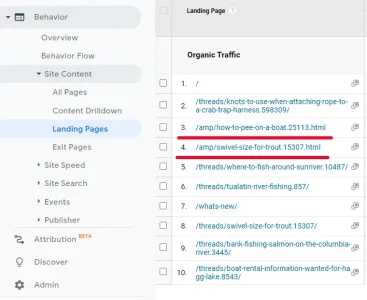
Here are just a few reasons why AMP is bad for both the webmasters and the web as a whole.
Disappearing links (and ad revenue)
One of the problems with the Accelerated Mobile Pages concept is that content built utilizing AMP is served up through a cache on Google’s server rather than actually linking to the original page on a publisher’s website. This means that the reader is spending more time on Google’s site and will be seeing Google advertising as opposed to any paid advertising on the content provider’s site. More money for Google, less money for the actual content creator.
Less analytics and more work
Although AMP works with Google Analytics, you have to use a different tag, which can be quite time-consuming. If you don’t include the new tag, you miss out on a ton of analytics information.
Plus, AMP is not particularly easy when it comes to installation. You basically have to do all the coding manually. This puts you before a dilemma: either design your site the way you want it and the way it will convert, and set it up for AMP later, — or disregard conversion and aesthetics and make it an AMP site from the start.
Less control of your content
Because AMP is a stripped-down version of your original content, you are at Google’s mercy when it comes to how (and even if) your content is actually displayed. You give up the overall styling of your page in return for a really quick download. If your site features a lot of video, AMP would not be that beneficial for you as the download time would pretty much remain the same.
Less control of your design
Basically, Google is “forking” the web into a version of the internet that looks exactly like Google wants. The amount of tags is very limited, so most AMP pages have a very plain look — an
custom web development becomes sort of an unrealistic and unnecessary field.
In conclusion, while we can all agree on the fact that a faster mobile web experience is better for everyone — especially since the majority of web surfing is now done via mobile — the costs of implementing AMP may just be too high.
If you have a well-designed responsive website with optimized images and video, you really don’t need to worry about AMP.